The Warrior Sage
Learn about Parashurama, the axe-wielding avatar who restored dharma by challenging the arrogant Kshatriya warrior class.
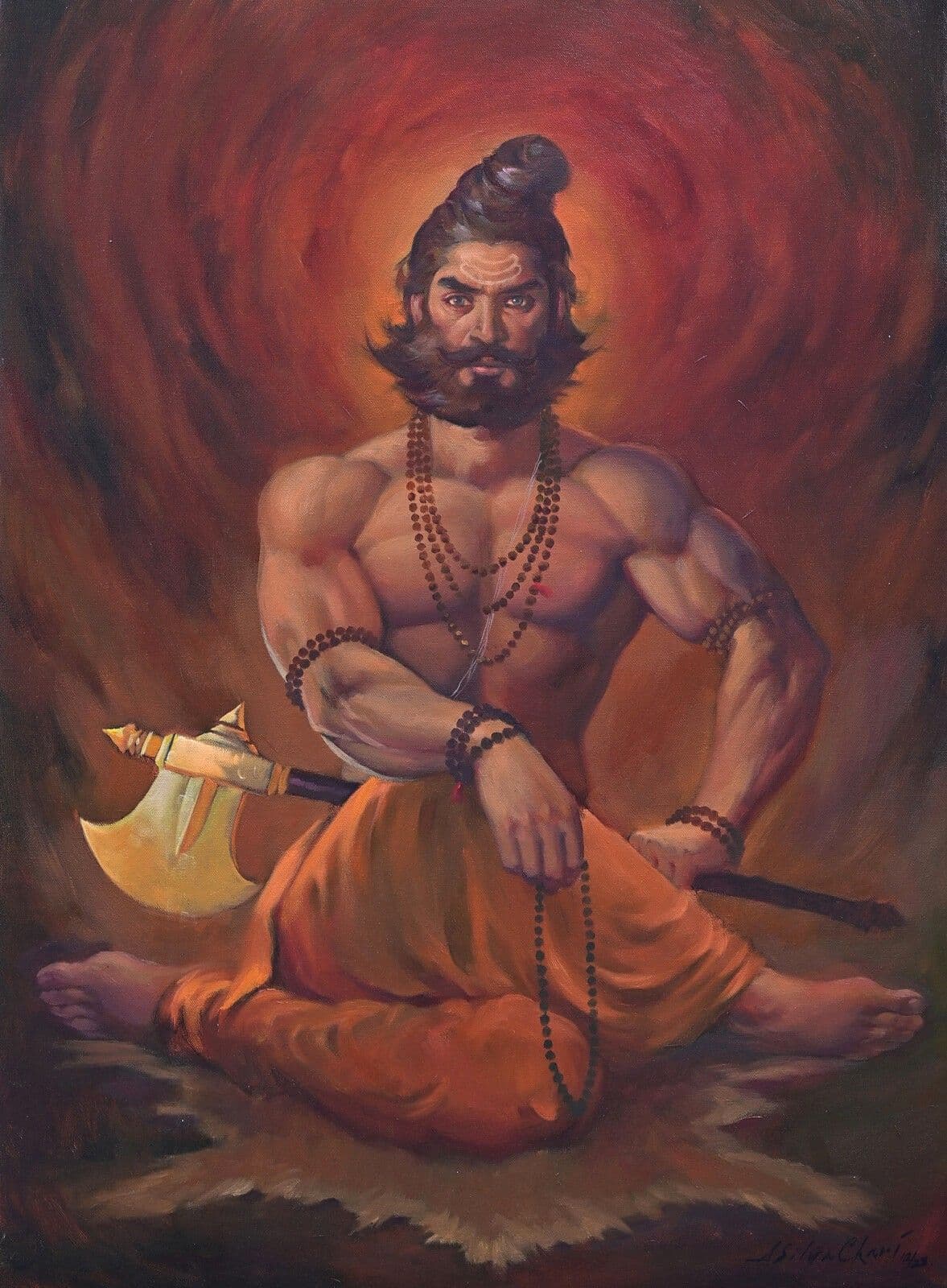
Bhargava Rama, Rama with the Axe
To eliminate the corruption and tyranny of the Kshatriya class who had deviated from Dharma, and to restore the balance of righteousness.
Born to sage Jamadagni and Renuka of the Bhrigu lineage.
Received divine axe (Parashu) and blessings from Lord Shiva after intense penance.
Avenged the murder of his father by killing Kartavirya Arjuna, a corrupt Kshatriya king.
Exterminated corrupt Kshatriyas 21 times to cleanse the Earth.
Donated the conquered land to Maharishi Kashyapa and retired to Mahendra mountain.
Remains a Chiranjeevi (immortal) and is said to reappear to guide Kalki.
Learn about Parashurama, the axe-wielding avatar who restored dharma by challenging the arrogant Kshatriya warrior class.
Read about the significant encounter between Parashurama and Lord Rama after the latter broke Shiva's bow.
Power must be used for justice, not oppression.
Spiritual discipline must accompany action.
Righteous wrath has its place when dharma is at stake.
"To rid the Earth of unrighteous kings, I rose with my axe and restored the cosmic order."
"He who bears the axe bears the burden of restoring truth — not for anger, but for Dharma."
No specific stotras currently linked to Parashurama.